History of New York City
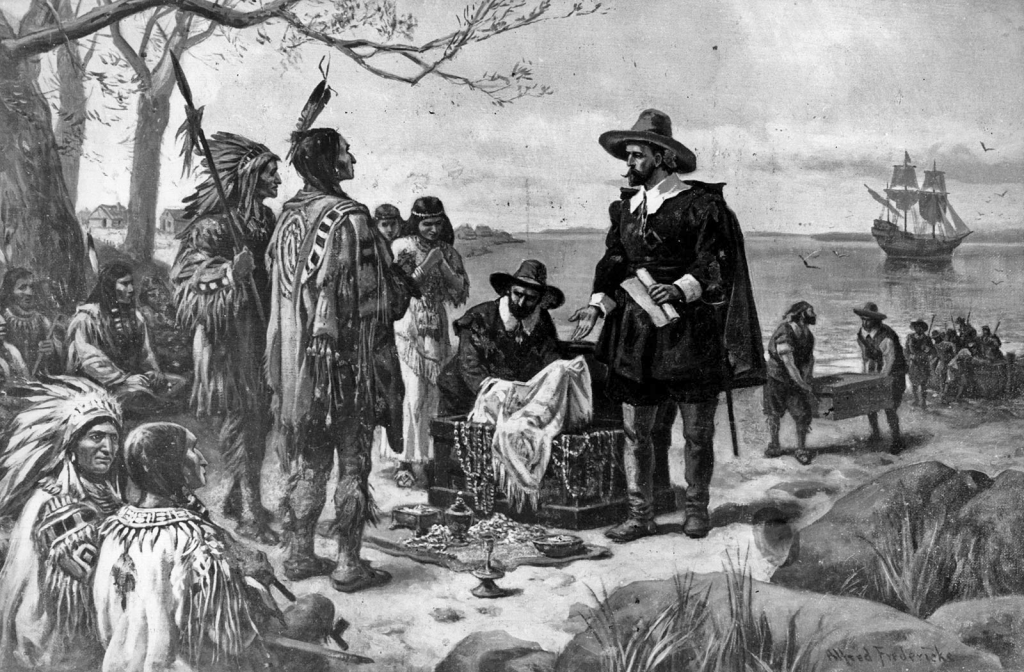
The written history of New York City began with the first European explorer the Italian Giovanni da Verrazzano in 1524. European settlement began with the Dutch in 1608.
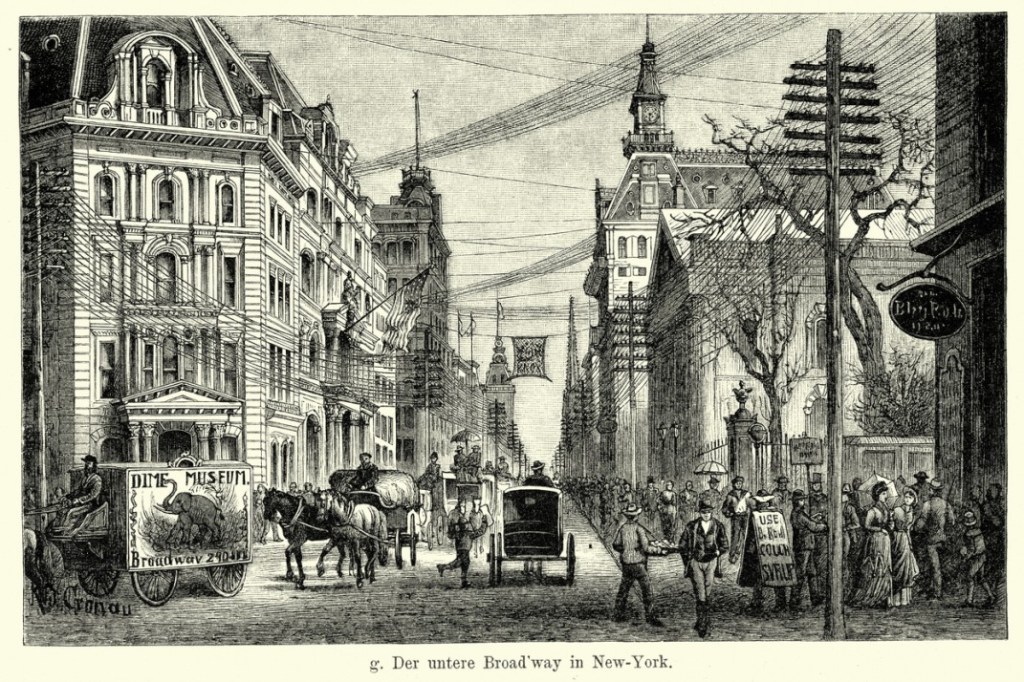
The “Sons of Liberty” destroyed British authority in New York City, and the Stamp Act Congress of representatives from throughout the Thirteen Colonies met in the city in 1765 to organize resistance to British policies. The city’s strategic location and status as a major seaport made it the prime target for British seizure in 1776. General George Washington lost a series of battles from which he narrowly escaped (with the notable exception of the Battle of Harlem Heights, his first victory of the war), and the British Army controlled New York City and made it their base on the continent until late 1783, attracting Loyalist refugees. The city served as the national capital under the Articles of Confederation from 1785-1789, and briefly served as the new nation’s capital in 1789–90 under the United States Constitution. Under the new government the city hosted the inauguration of George Washington as the first President of the United States, the drafting of the United States Bill of Rights, and the first Supreme Court of the United States. The opening of the Erie Canal gave excellent steamboat connections with upstate New York and the Great Lakes, along with coastal traffic to lower New England, making the city the preeminent port on the Atlantic Ocean. The arrival of rail connections to the north and west in the 1840s and 1850s strengthened its central role.
Beginning in the mid-18th century, waves of new immigrants arrived from Europe dramatically changing the composition of the city and serving as workers in the expanding industries. Modern New York City traces its development to the consolidation of the five boroughs in 1898 and an economic and building boom following the Great Depression and World War II. Throughout its history, New York City has served as a main port of entry for many immigrants, and its cultural and economic influence has made it one of the most important urban areas in the United States and the world.
Native American settlement
The area that eventually encompassed modern day New York City was inhabited by the Lenape people. These groups of culturally and linguistically related Native Americans traditionally spoke an Algonquian language now referred to as Unami. Early European settlers called bands of Lenape by the Unami place name for where they lived, such as “Raritan” in Staten Island and New Jersey, “Canarsee” in Brooklyn, and “Hackensack” in New Jersey across the Hudson River from Lower Manhattan. Some modern place names such as Raritan Bay and Canarsie are derived from Lenape names. Eastern Long Island neighbors were culturally and linguistically more closely related to the Mohegan-Pequot peoples of New England who spoke the Mohegan-Montauk-Narragansett language.
These peoples all made use of the abundant waterways in the New York City region for fishing, hunting trips, trade, and occasionally war. Many paths created by the indigenous peoples are now main thoroughfares, such as Broadway in Manhattan, the Bronx, and Westchester. The Lenape developed sophisticated techniques of hunting and managing their resources. By the time of the arrival of Europeans, they were cultivating fields of vegetation through the slash and burn technique, which extended the productive life of planted fields. They also harvested vast quantities of fish and shellfish from the bay. Historians estimate that at the time of European settlement, approximately 5,000 Lenape lived in 80 settlements around the region.
Modern history
The 1980s began a rebirth of Wall Street, and the city reclaimed its role at the center of the worldwide financial industry. Unemployment and crime remained high, the latter reaching peak levels in some categories around the close of the decade and the beginning of the 1990s. Neighborhood restoration projects funded by the city and state had very good effects for New York, especially Bedford-Stuyvesant, Harlem, and The Bronx. The city later resumed its social and economic recovery, bolstered by the influx of Asians, Latin Americans, and U.S. citizens, and by new crime-fighting techniques on the part of the New York Police Department.
In the late 1990s, the city benefited from the success of the financial sectors, such as Silicon Alley, during the dot com boom, one of the factors in a decade of booming real estate values. New York was also able to attract more business and convert abandoned industrialized neighborhoods into arts or attractive residential neighborhoods; examples include the Meatpacking District and Chelsea (in Manhattan) and Williamsburg (in Brooklyn).
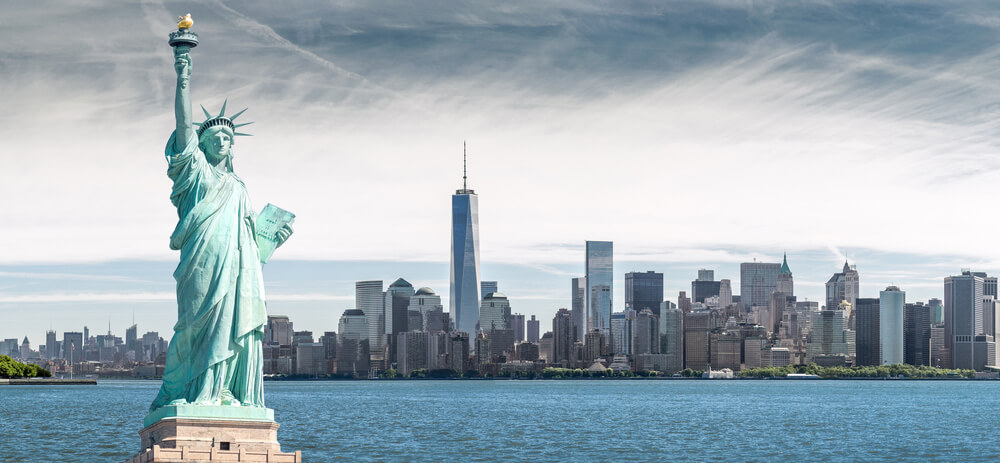
New York’s population reached an all-time high in the 2000 census; according to census estimates since 2000, the city has continued to grow, including rapid growth in the most urbanized borough, Manhattan. During this period, New York City was a site of the September 11 attacks of 2001; 2,606 people who were in the towers and in the surrounding area were killed by a terrorist attack on the World Trade Center, an event considered highly traumatic for the city but which did not stop the city’s rapid regrowth. On November 3, 2014, One World Trade Center opened on the site of the attack.[47] Hurricane Sandy brought a destructive storm surge to New York City in the evening of October 29, 2012, flooding numerous streets, tunnels, and subway lines in Lower Manhattan. It flooded low-lying areas of Brooklyn, Queens, and Staten Island. Electrical power was lost in many parts of the city and its suburbs.
 Visit New York